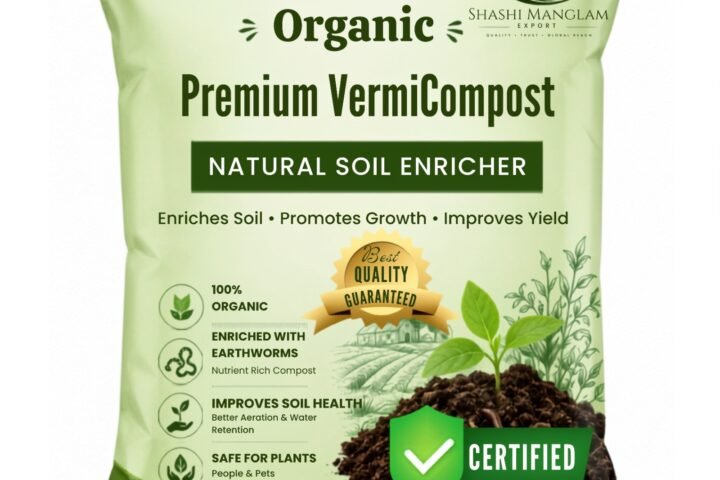
Premium Vermicompost
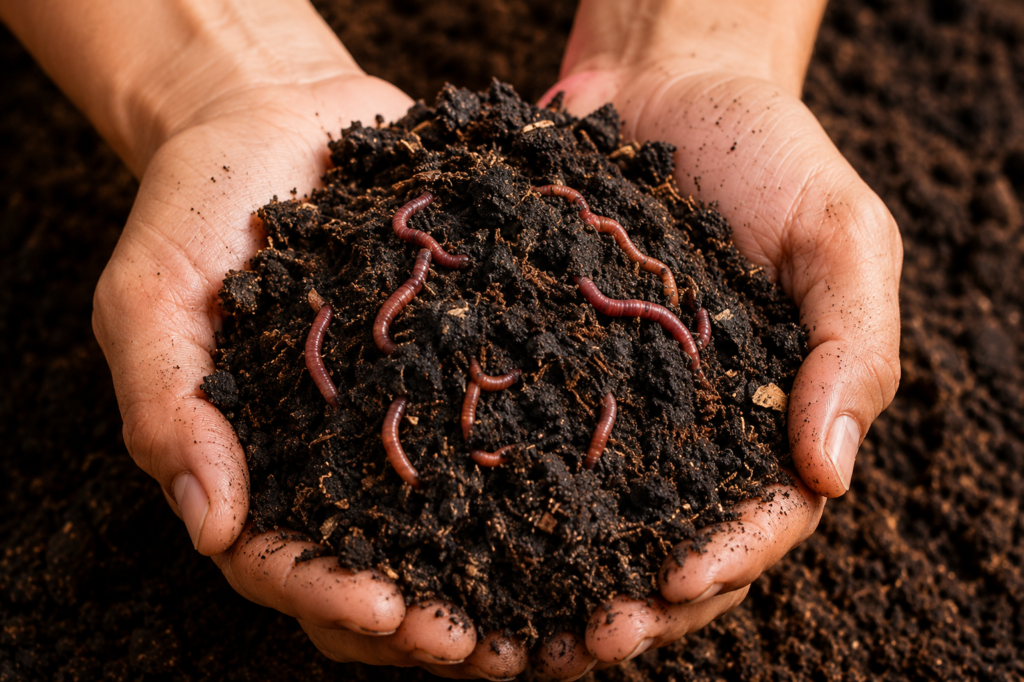
Dark, friable, earthy-smelling compost produced by earthworm digestion of pre-composted organic residues, matured, screened and packed without chemical additives.
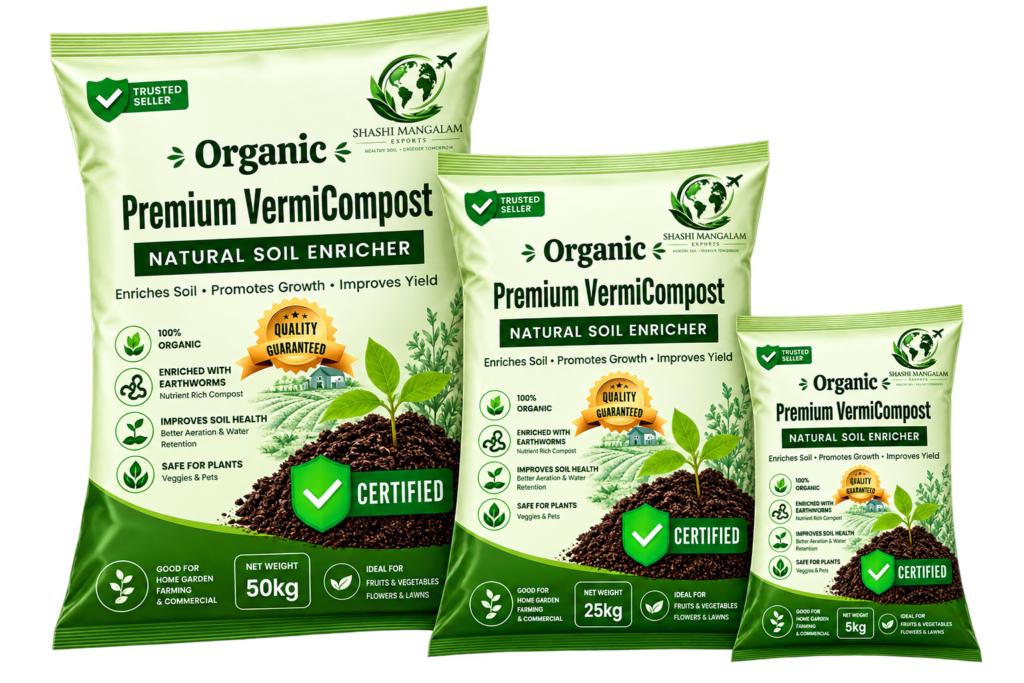 5 / 10 / 25 / 50 kg and loose bulk
What you are actually buying
Vermicompost is what remains after earthworms process partly decomposed organic material. The castings they leave behind are finer, more stable and biologically richer than the residue that went in.
Ours is made only from identified agricultural and agro-processing residues. It is left in the bed until the material has finished (no heat on turning, no ammonia smell), then screened so the particle size is even enough to broadcast, band or blend into a potting mix without clumping.
It is a soil amendment. It works on the medium: structure, water-holding, biological activity, and a slow supply of nutrients held in organic form.
What it changes in the field
Better soil structure
Improves aggregation and workability, particularly on tired, compacted soils that have been cropped hard for years.
Higher water-holding
Organic matter holds moisture in the root zone, stretching the interval between irrigations.
Gradual nutrient supply
Nutrients held in organic form release through the season instead of leaching away early.
Active soil biology
Feeds the microbial population that does the day-to-day work of nutrient cycling.
Fits organic systems
Produced without chemical additives, suitable for certified and transitioning farms.
Predictable handling
Screened to an even grade, so it broadcasts, bands and blends without clumping.
Typical characteristics
| Parameter | Specification |
|---|---|
| Appearance | Dark brown to near-black |
| Texture | Fine, friable, non-sticky |
| Odour | Earthy, no ammonia |
| Particle size | Screened to 4 mm |
| Moisture | 25 to 35% |
| pH (1:5 aqueous) | 6.5 to 7.5 |
| Electrical conductivity | Below 4 dS/m |
| Organic carbon | 14 to 18% |
| Nitrogen (N) | 1.0 to 1.4% |
| Phosphorus (P2O5) | 0.7 to 1.0% |
| Potassium (K2O) | 0.9 to 1.2% |
| C:N ratio | Near 14:1 |
| Additives | None |
Three things happen after it goes in
- Aggregation
- Organic matter and microbial gums bind fine particles into crumb structure. Water infiltrates instead of running off, and roots meet less resistance.
- Retention
- Stable organic matter holds both moisture and cations, keeping water and nutrients in the root zone between irrigations.
- Biological cycling
- Compost feeds soil biology, and that biology continues to release nutrients gradually rather than in a single flush.
Know the tonnage you need? Get a delivered price today.
Where and how it is applied
Field crops
Broadcast and incorporated during land preparation, ahead of sowing.
Orchards
Applied in the basin around the drip line, then lightly worked in and irrigated.
Vegetables
Mixed into beds before transplanting, with top-ups between cycles.
Nursery mixes
Blended into potting media as the organic fraction.
Polyhouses
Incorporated into bed media before each crop cycle.
Landscaping
Worked into lawn and planting-pit soil at establishment.
Application rates depend on crop, soil condition and existing organic-matter levels. We give a recommendation against your specific situation rather than a single blanket figure. See the application-rate guide.
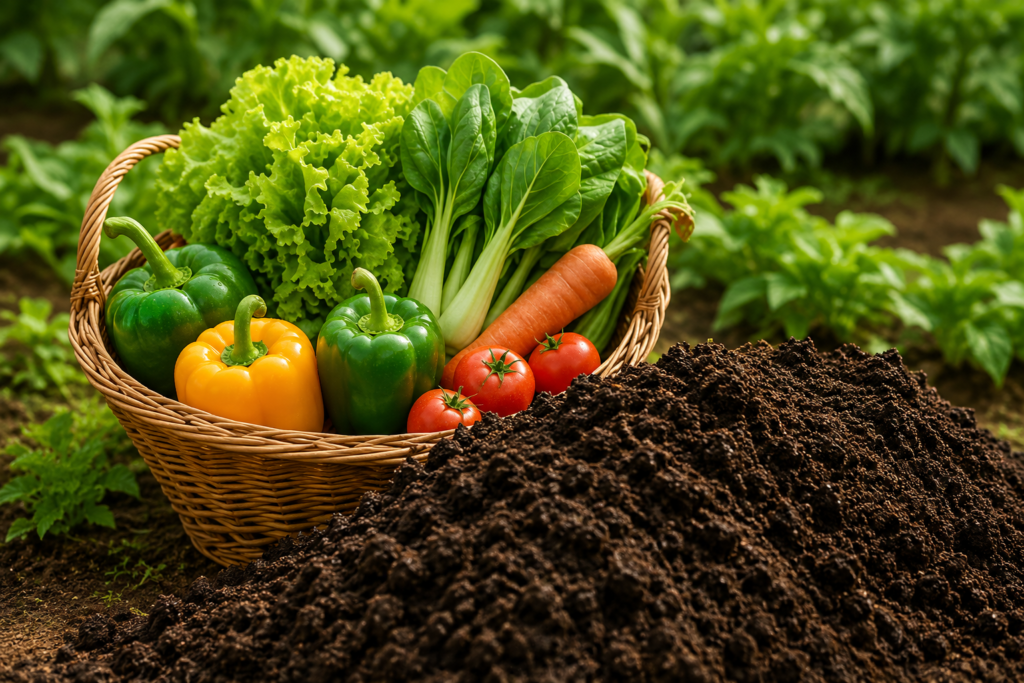
Used across most cropping systems
- Wheat
- Paddy
- Sugarcane
- Cotton
- Pulses
- Oilseeds
- Potato
- Onion
- Tomato
- Chilli
- Banana
- Mango
- Citrus
- Grapes
- Tea
- Turmeric
- Flowers
- Fodder
How this batch became a product
Residue sourcing
Agricultural and agro-processing residues are received, inspected and logged by source.
Pre-composting
Material is heaped and turned to break down the coarse fraction and stabilise temperature.
Earthworm processing
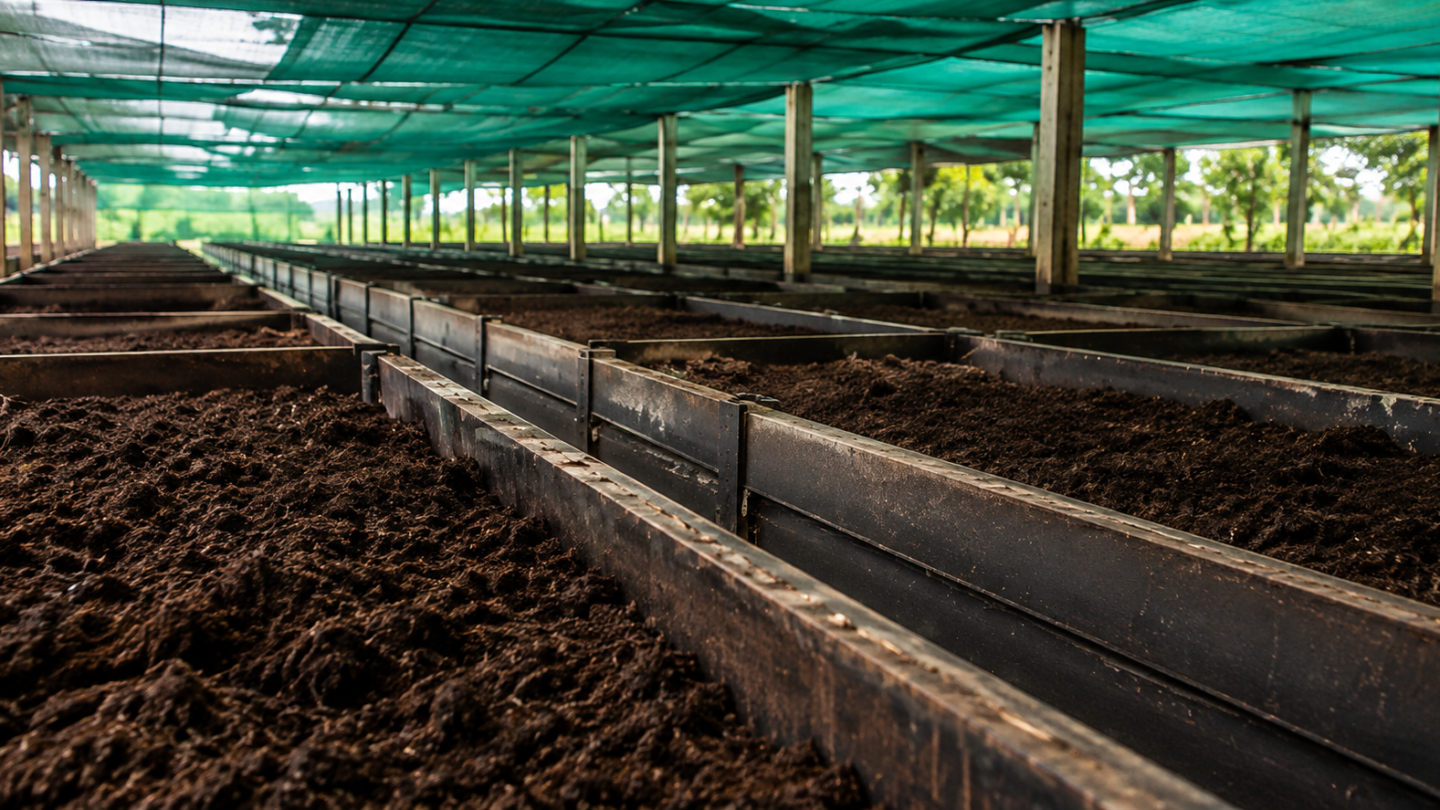
Cooled material is fed to worms in covered beds with moisture held in a working range.
Maturation
Beds are rested until the castings darken, lose odour and stop heating on turning.
Screening
Compost is sieved to remove worms, cocoons and oversize material, giving a uniform grade.
Packing & dispatch
Graded material is packed to 5-50 kg or loaded loose, then dispatched against the order.
Quality approach
Raw material selection
Only identified agricultural and agro-processing residues are accepted. Loads are inspected on arrival and logged by source; contaminated material is turned away.
Pre-composting discipline
Residue is stabilised before it reaches a worm bed. Feeding fresh material directly to worms is the single most common cause of failed batches.
Bed conditions
Moisture, shade and feeding rate are managed through the processing cycle, because worm activity, not time alone, determines how the material turns out.
Maturity before harvest
A bed is lifted when the castings have darkened, the odour is earthy and turning produces no heat. Order pressure does not override that.
Screening
Every batch is sieved before packing. Worms and cocoons return to production; oversize and stone are removed; the grade comes out even.
Packing standards
Packed from screened stock only, to consistent pack weights, in sealed and labelled bags. Loose bulk is kept separate from packed inventory.
How we supply, and when it lands
Order minimums, dispatch times and payment terms are set out below so you know what committing to a load involves before you enquire.
Minimum order
1 MT loose or 500 kg packed. Dealer opening stock is 2 MT.
Lead time
3 to 5 days North India, 5 to 8 West and Central, 7 to 10 South, East and North-East, from confirmed order to dispatch.
Freight
Quoted to your delivery point, or collect ex-plant if you prefer to arrange your own transport.
Payment
50% advance, balance before dispatch. Credit terms open to repeat buyers. Quotes hold for 15 days.
Storage
Shaded, off ground, protected from standing water.
Priced against your order, not a published list
Tonnage, packing and destination all move the number, so a printed rate would be wrong for almost every buyer. Send the requirement and you get a delivered price the same working day.
Four pack sizes, or by the tonne
Retail packs are produced for dealer shelves and small-holding use. Commercial orders usually move as loose bulk or palletised 50 kg bags. Pricing is quoted per order, because quantity, destination and packing all decide it.
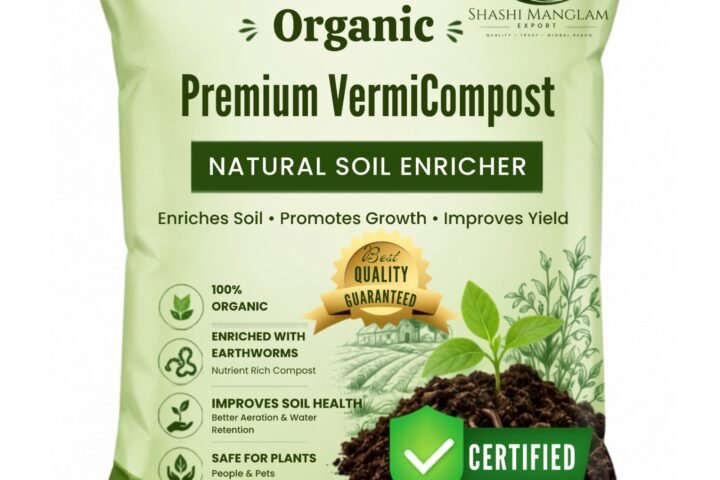
5 kg
Kitchen gardens, terrace growers and retail shelf.
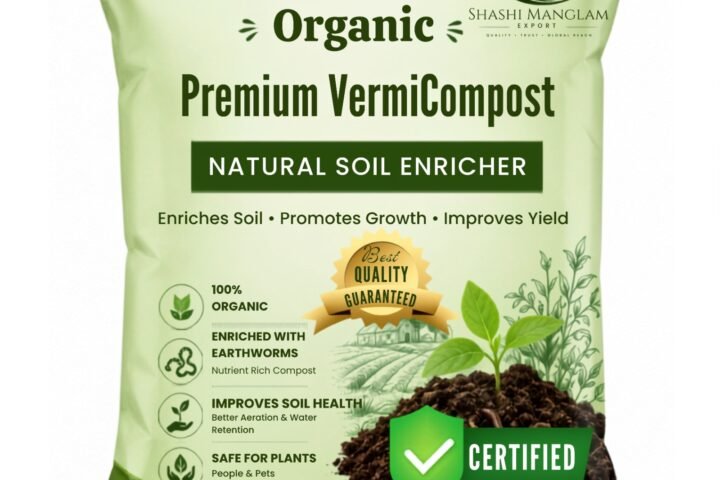
10 kg
Home orchards, small polyhouses and nursery top-ups.
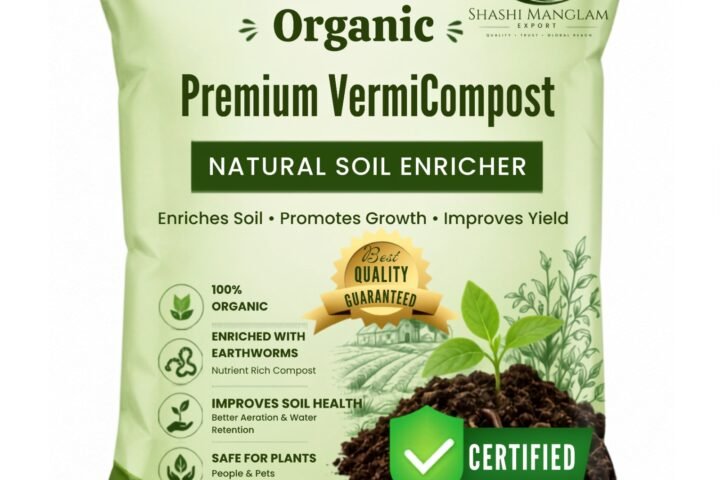
25 kg
Nurseries and mid-size horticulture; single-person handling.
50 kg
Field application and dealer stock; palletised for bulk despatch.
Loose bulk supply
Full-truck loads dispatched to farm gate, dealer warehouse or port. Share your tonnage and destination and we will confirm lead time and freight.
Why choose us
Graded output
Screened to a consistent particle size, batch after batch
Bulk ready
Loose tonnage and 5-50 kg packs from the same production line
Pan-India supply
Road freight to farm gate, dealer warehouse or port
Single product focus
We make vermicompost and nothing else
Before you order
It depends on the crop, the soil's current organic-matter level and whether you are correcting a depleted soil or maintaining a healthy one. We give a rate against your situation rather than quoting one number for every field, share your crop and area with your enquiry.
Most field applications go in during land preparation, ahead of sowing, so the material is incorporated and moist before the crop establishes. Orchards are usually done in the basin at the start of the growth flush. Vegetables take it into the bed before transplanting.
For most commercial cropping, no. Not immediately, at least. Compost rebuilds the soil's capacity to hold and cycle nutrients, which typically lets growers reduce synthetic inputs over successive seasons. Farms running fully organic systems build their programme around organic sources with the rates and planning that requires.
Keep packs in shade, off bare ground, and out of standing water. The material is biologically active; drying it out completely or waterlogging it both reduce its value. Under reasonable storage it holds well for months.
Our standard grade is screened fine enough for most nursery blends. If you need a specific sieve size for an automated potting line, mention it in your enquiry so we can confirm before you order.
Bulk orders typically move as loose material or palletised 50 kg bags. Dealer stock is usually 5, 10 and 25 kg retail packs. We can discuss private-label packing for distribution partners.
Get a quote for your volume
Quantity, destination and packing determine price. Give us those three and you’ll have a workable number rather than a range.
- Related reading
- vermicompost for organic farming
- Production detail
- our manufacturing process
- Standards
- quality & sustainability