
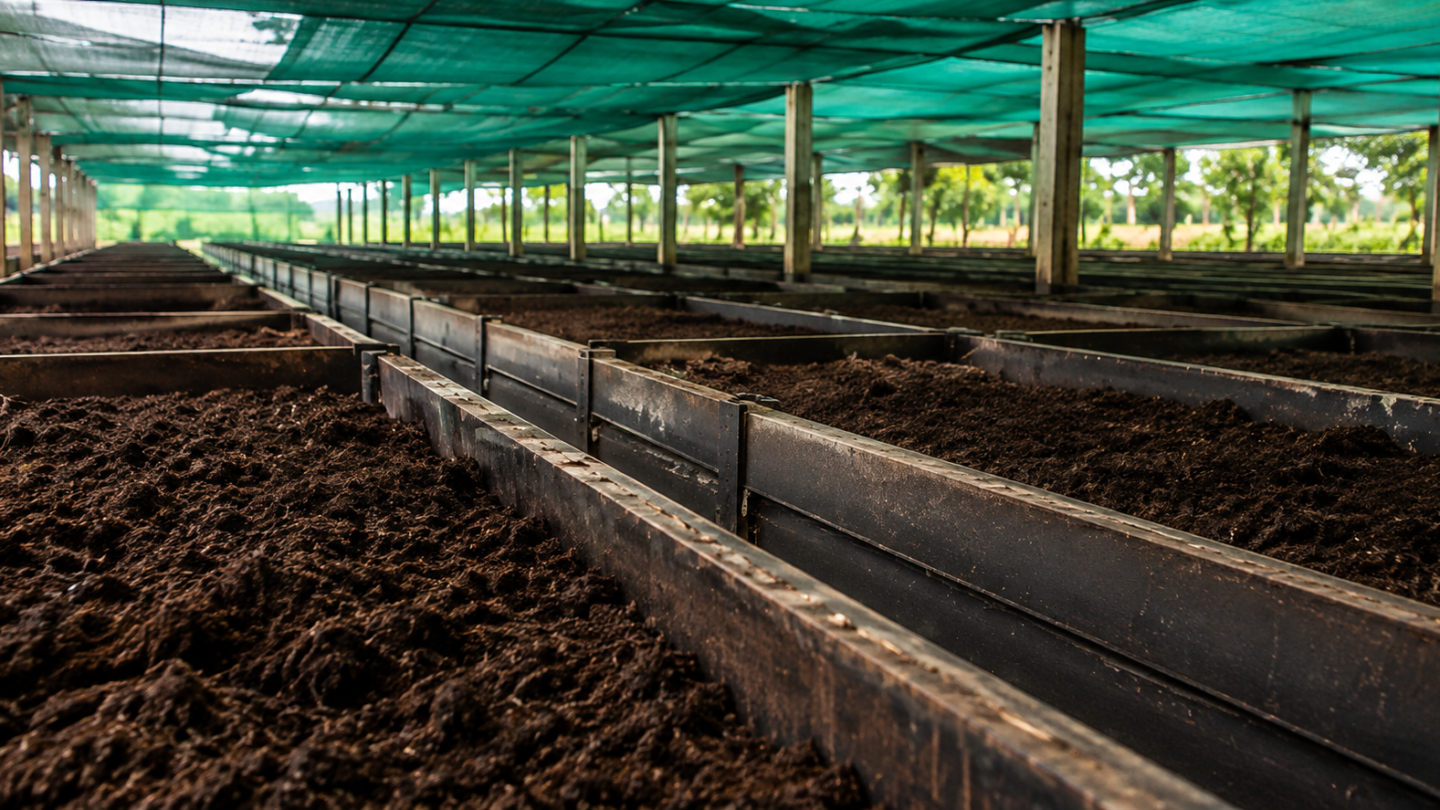
Ten stages between residue and product
Compost quality is decided long before packing. What follows is the sequence our material actually moves through, and what we are controlling at each point.
- Stage 01
Organic material sourcing
Agricultural and agro-processing residues are received at the yard, inspected on arrival and logged against their source. Mixed municipal waste is not accepted, the input decides the ceiling on output quality.
Control points- Only identified agricultural and agro-processing residues
- Source recorded for every incoming load
- Visual rejection of contaminated or foreign material

- Stage 02
Pre-processing
Incoming material is sorted, oversized fractions are broken down and non-organic contaminants are picked out before anything is heaped.
Control points- Removal of plastic, stone and metal contaminants
- Size reduction of coarse residue
- Blending to a workable carbon balance
- Stage 03
Controlled decomposition
Material is heaped and turned so it heats, breaks down and stabilises. This is the stage that takes the heat and the raw edge out of fresh residue.
Control points- Heap turning schedule
- Moisture maintained through the heat phase
- Cooling confirmed before beds are loaded
- Stage 04
Earthworm processing
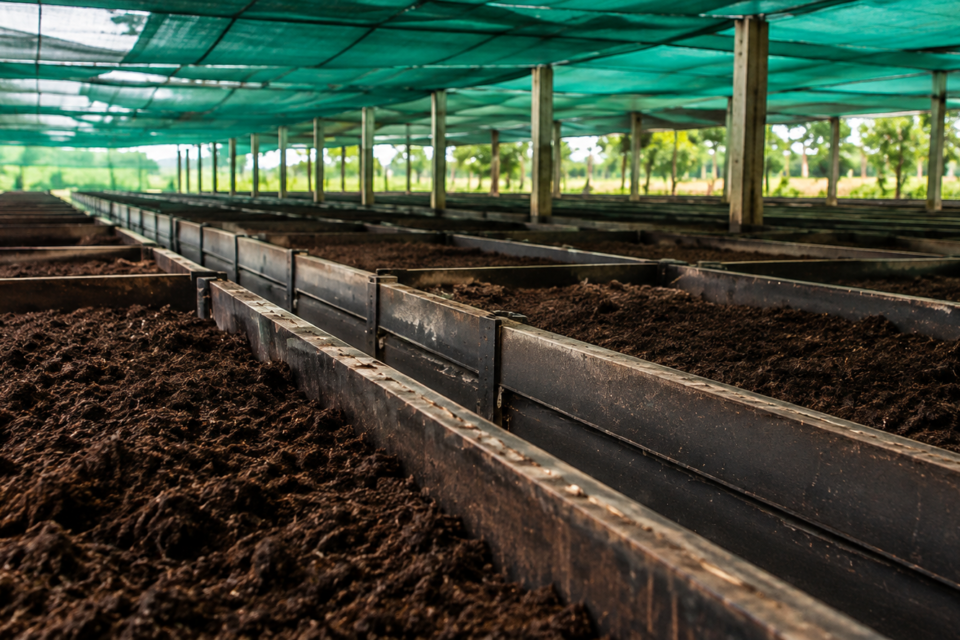
Cooled, partly decomposed feed is loaded into covered beds and worked by earthworms. This is where the material becomes vermicompost rather than ordinary compost.
Control points- Bed moisture held in a working range
- Shade cover and temperature management
- Feeding rate matched to worm population
- Stage 05
Maturation
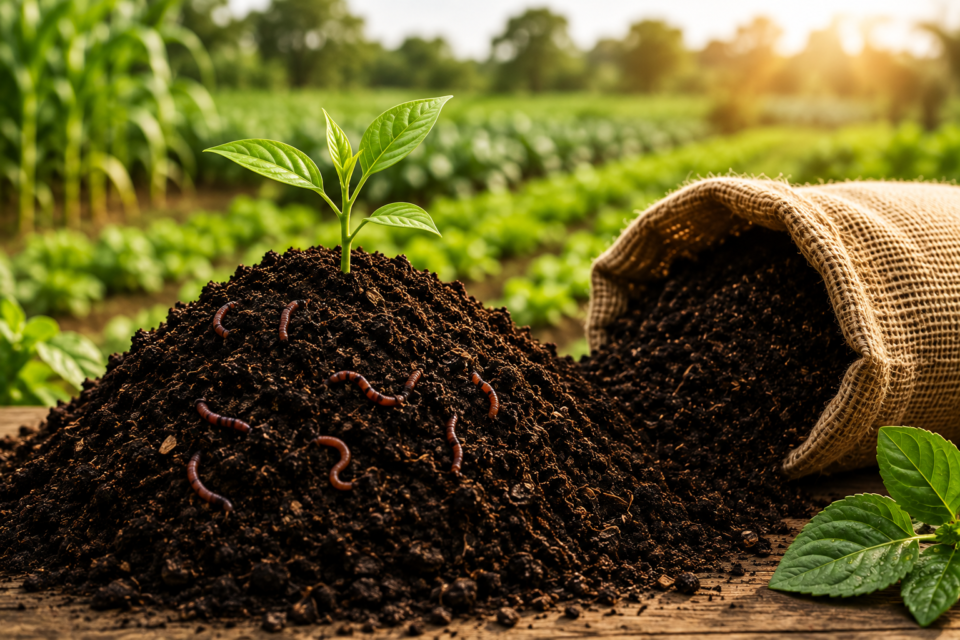
Beds are rested. Castings darken, the smell turns earthy and the material stops heating when turned, the practical signs that it has finished.
Control points- Beds harvested on maturity, not on order pressure
- No heating on turning before lifting
- Odour and colour checked bed by bed
- Stage 06
Screening
Matured compost is sieved to separate worms and cocoons for return to the beds and to remove oversize material, leaving an even, free-flowing grade.
Control points- Worms and cocoons returned to production
- Oversize and stone removed
- Uniform particle size across the batch

- Stage 07
Quality inspection
Each batch is checked against the sensory and physical characteristics we publish, colour, texture, odour, moisture feel, before it is cleared for packing.
Control points- Batch checked against defined characteristics
- Non-conforming material held back
- Laboratory parameters as per client testing programme
- Stage 08
Packaging
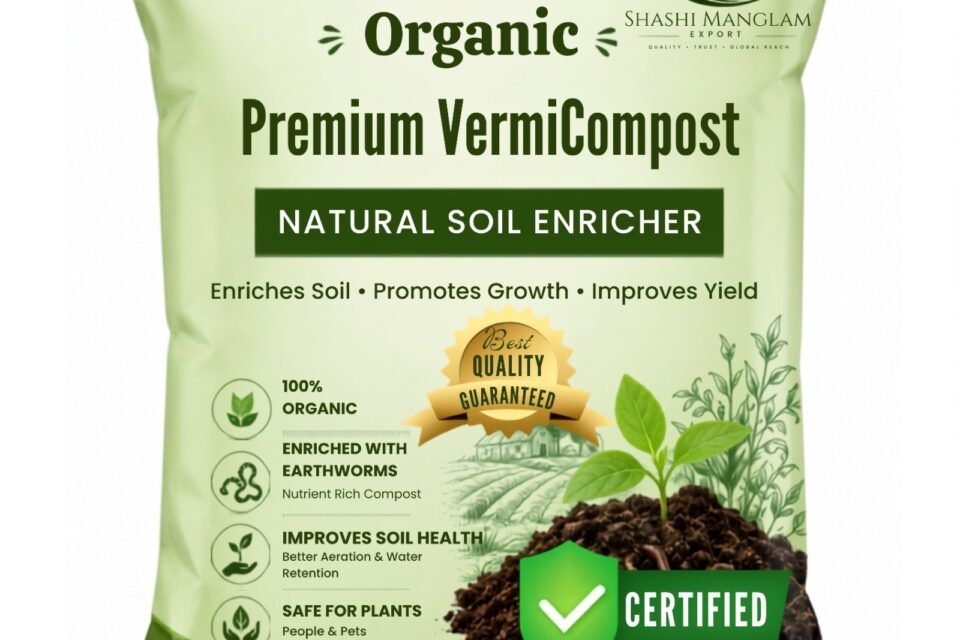
Cleared material is packed into 5, 10, 25 or 50 kg bags, or held loose for bulk dispatch. Packing is done from screened stock only.
Control points- Pack weight consistency
- Sealed bags, labelled by pack size
- Loose bulk kept separate from packed stock
- Stage 09
Storage
Finished stock is kept covered, off bare ground and out of standing water. Compost is biologically active; storage conditions still matter after packing.
Control points- Covered, shaded storage
- Stock rotated first-in, first-out
- Protection from waterlogging and full sun
- Stage 10
Dispatch
Orders are loaded against the confirmed schedule and dispatched by road to farm gate, dealer warehouse or port, with freight quoted by destination and load size.
Control points- Dispatch planned against your sowing window
- Road freight pan-India
- Delivery documentation with every consignment
Three shortcuts that ruin compost
Skipping pre-composting
Fresh residue heats and can drive worms out of the bed. Pre-composting takes the heat out before the worms ever see it.
Harvesting early
Immature compost keeps decomposing in the field and can tie up nitrogen exactly when the crop needs it. Beds finish before they are lifted.
Packing unscreened
Unscreened material carries lumps, stones and cocoons, and cannot hold a consistent application rate. Screening is what makes it a product.
Want to see it in person?
Serious buyers are welcome at the plant. Read our quality and sustainability approach, then arrange a visit.