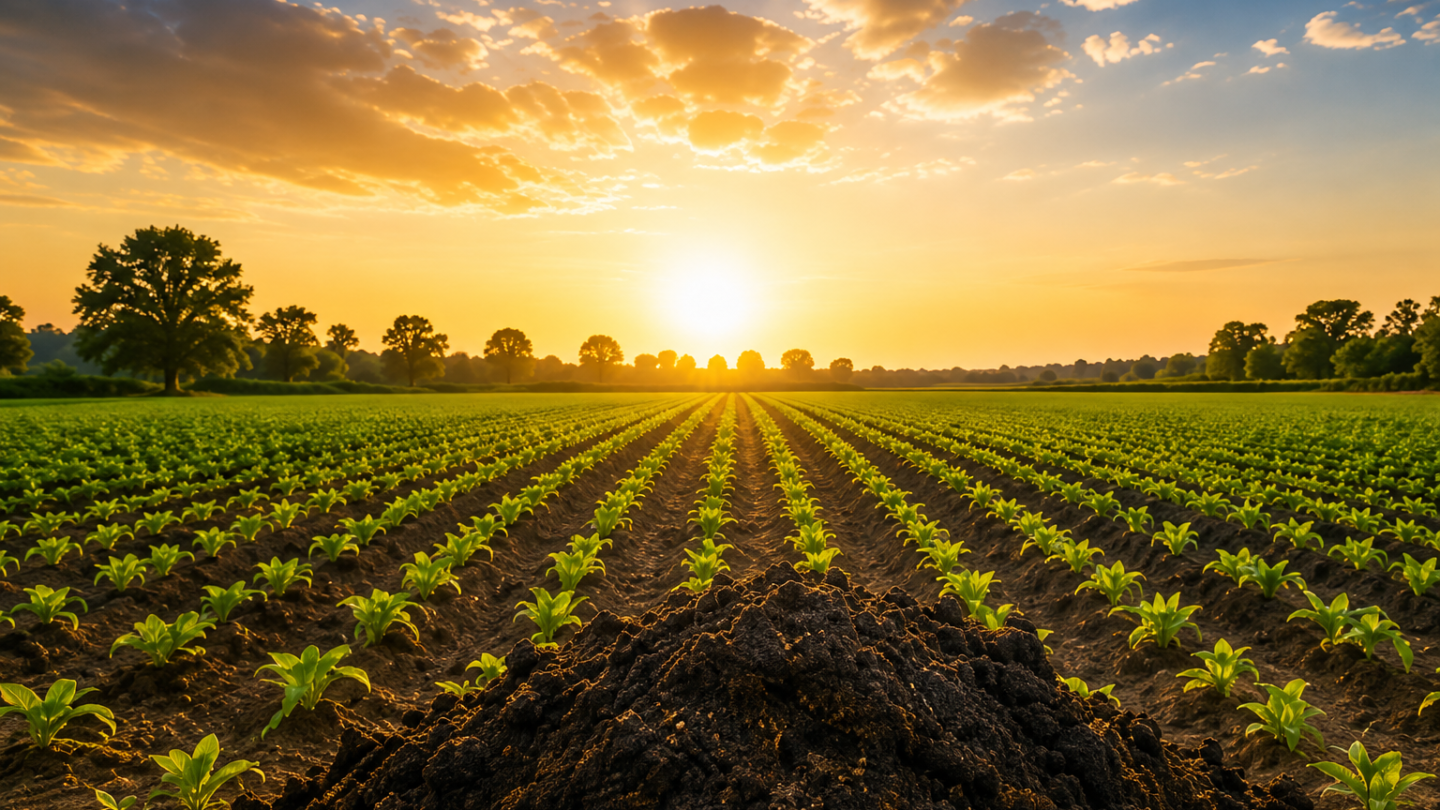
Organic farming starts underground
Removing synthetic inputs is the easy part. Building a soil that can carry a crop without them takes organic matter, applied consistently, season after season.
Soil that has been spent rather than maintained
Most farms considering organic conversion are not starting from healthy ground. Decades of intensive cropping with little organic return leave soils that look fine and behave badly.
Depleted organic matter
Residue removed or burned each season, with nothing organic returned, draws down the soil’s carbon stock year on year.
Structure breakdown
Compacted, crusting soils shed irrigation water instead of taking it in, and restrict rooting depth.
Input dependence
The same fertiliser dose delivering less each year is a symptom of a soil that can no longer hold or cycle what it is given.
Feed the soil on a schedule, not on a whim
Organic matter is not a one-time correction. The farms that come through conversion well are the ones that treat compost as a recurring line item and apply it at a known rate, at the same point in every cycle.
A consistent grade
If the material varies, the rate has to be re-guessed every load. Screened, matured compost keeps your programme stable.
An input your certifier accepts
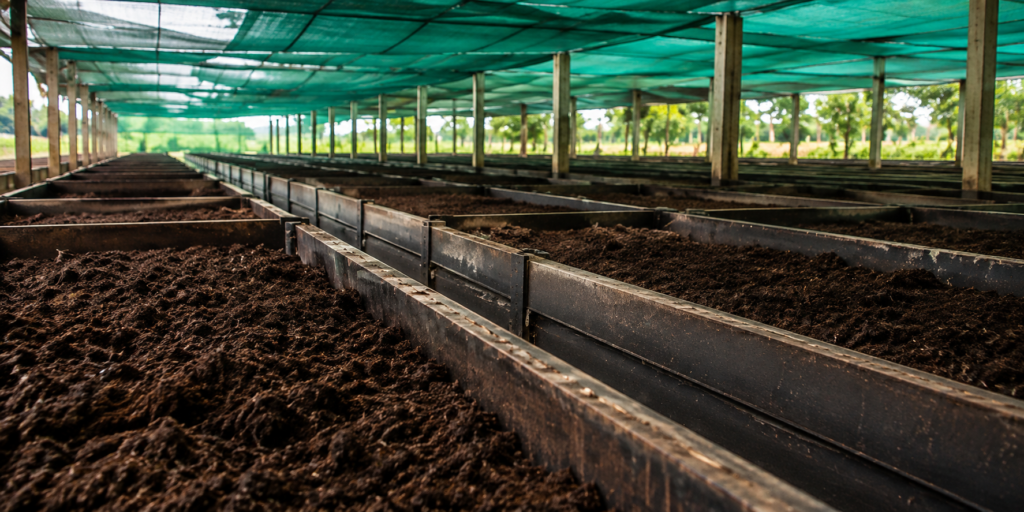
Produced without chemical additives, from identified agricultural residues, with supply documentation available.
Delivery that matches the calendar
Compost that arrives after the field is sown is worth very little. Dispatch is planned against your windows.
What improves, and roughly when
Easier working soil
Improved friability and infiltration are usually the first things operators notice, especially on crusting soils.
Better moisture holding
Organic matter in the root zone stretches the interval between irrigations.
Improved germination beds
A softer, better-aggregated seedbed gives more even establishment.
Rising organic carbon
Repeat application builds the soil's carbon stock, the base every other soil property sits on.
Lower synthetic dependence
As cycling capacity returns, many growers find they can step down fertiliser without losing yield.
Certification-ready records
A documented, additive-free input from one traceable producer simplifies your certifier's paperwork.
Timelines are indicative and depend heavily on starting soil condition, rainfall, irrigation and cropping intensity. We would rather set an honest expectation than promise a season-one transformation.
Getting it into the ground
- Timing
- During land preparation, before sowing or transplanting
- Method
- Broadcast and incorporate, or band along the row for concentrated placement
- Orchards
- Into the basin near the drip line, worked in and irrigated
- Moisture
- Irrigate after application; do not leave compost dry on the surface
- Rate
- Set against crop, soil condition and current organic-matter level.
Who this is written for
Certified organic farms
Operations already under an organic standard needing dependable annual volumes.
Farms in conversion
The transition years, where soil biology is rebuilding and yield risk is highest.
Natural & regenerative farming
Programmes built around organic matter, residue return and reduced tillage.
Organic horticulture
Fruit, vegetable and plantation growers supplying organic-certified buyers.
FPOs & farmer groups
Collective procurement for member farms, supplied against a shared schedule.
Speak to someone who knows the crop
Tell us the crop, the area and where the soil currently stands. You will get a rate recommendation and a supply plan, and a straight answer if compost alone will not solve your problem.
- Product detail: premium vermicompost specification
- Background reading: rebuilding soil organic carbon
- Standards: how we control quality